• There has been a recent cluster of spammers accessing BARFer accounts and posting spam. To safeguard your account, please consider changing your password. It would be even better to take the additional step of enabling 2 Factor Authentication (2FA) on your BARF account. Read more here.

Drilling Plexiglass

gixxerjeff

Optimistic Underdog
Joined
Nov 17, 2008
Location
Santa Rosa
Moto(s)
Some fast ones and some dirty ones.
Name
Derp
So, I'm a little bummed....
Tap Plastics let me down.
I'm restoring a 30' off-shore racing sailboat and need to replace the foredeck hatch. The metal framing is still okay, but the 1/2" plexi had spiderweb-cracked, faded and had all but given up.
I took the old plexi as an identical template for them to use. The dimensions were cut perfectly, but the two holes I'd asked to be drilled for the latch assemblies were drilled too small. They are 7/16 (ID) but they drilled them at 3/8.
Despite saying "No problem" over the phone, I later learned they drilled 3/8 because they don't have 7/16.....I mean, WTF? I didn't discover this until I was trying to push the latches through those holes. I returned to Tap Plastics saying "this should be an easy one, guys" ....only to be told they can't do it. I was told by their "experts" that "maybe you can use something like a Dremel tool."
I let them know that this mistake lands on me, as I had mistakenly expected some level of precision from them.....my bad.
Now I have an expensive piece of 1/2 inch plexi that I need to bore out. Keep in mind, this is a water seal, so it needs to be perfectly round. The Dremel idea scares me for this reason.
Taping it off and systematically running through all the bits in my drill index seems to be my only way to go, but I really don't want to chip it....or worse, crack it.
Other than returning to Tap Plastic to spew some profanity at them.....how would you address this?
 
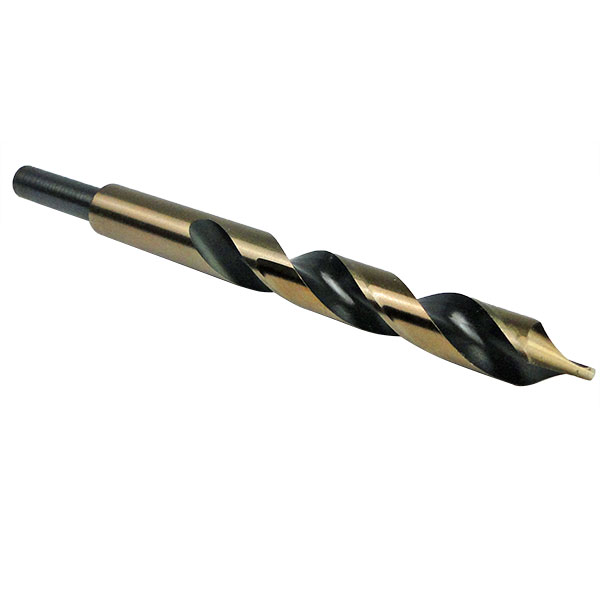
I work in acrylic all day, can you get it to Santa Cruz? Avoid the Dremel if you need precise round holes. It can be drilled with a standard split point drill on the CNC but, work holding, and tool rigidity is critical. The guys who make semi precision holes on the floor with hand drills swear by the pointier looking acrylic drills pictured above. less cracks and smoother push through. If your going to go that route, using a sacrificial piece of plywood to drill through on the back side will help tremendously. As will FIRMLY attaching the acrylic to it. Clamps are your friend. Double sided tape is great too but getting it to stick to plywood might be tricky. You could maybe put a layer of single sided duct tape down over the wood and the double sided tape over it and the acrylic.

How big is the part? Got a drawing?
 
I work in acrylic all day, can you get it to Santa Cruz? Avoid the Dremel if you need precise round holes. It can be drilled with a standard split point drill on the CNC but, work holding, and tool rigidity is critical. The guys who make semi precision holes on the floor with hand drills swear by the pointier looking acrylic drills pictured above. less cracks and smoother push through. If your going to go that route, using a sacrificial piece of plywood to drill through on the back side will help tremendously. As will FIRMLY attaching the acrylic to it. Clamps are your friend. Double sided tape is great too but getting it to stick to plywood might be tricky. You could maybe put a layer of single sided duct tape down over the wood and the double sided tape over it and the acrylic.

How big is the part? Got a drawing?
Solid info, Mike....you rock.
The piece is 24'' x 24" with just the two holes where the latch pins protrude.
It's small enough to fit under my drill press...you're right, tool stability is gonna be everything....but I'm scared I'm gonna "chunk" it.
I can post a couple pics...after I get home.
 
In a drill press, I think it would be worth buying the specialty bit pictured above. That bit with a good backing to drill though, a rigid set up and cutting speed in the neighborhood should make quick work of the job. You don't need a jillion RPMs to get through acrylic. In fact most of my bad outcomes have been from too much RPM and not enough chip evacuation. Air blast is your friend. It doesn't take much friction to melt acrylic chips onto your cutting tool and make a mess of everything. I would try between 700-1200 RPM with light pecks and plenty of chip clearing. Since you are enlarging a hole, you won;t be engaging the full cutting surface of the drill. It may scream at you a bit. Feel will be your friend on this one. I have tons of scrap 1/2 acrylic I could send you to practice on if you have time for the mail to get there or if you want to come grab some. I might be out riding this weekend and could tote a few pieces around to hand off to you somewhere too!
 
In a drill press, I think it would be worth buying the specialty bit pictured above. That bit with a good backing to drill though, a rigid set up and cutting speed in the neighborhood should make quick work of the job. You don't need a jillion RPMs to get through acrylic. In fact most of my bad outcomes have been from too much RPM and not enough chip evacuation. Air blast is your friend. It doesn't take much friction to melt acrylic chips onto your cutting tool and make a mess of everything. I would try between 700-1200 RPM with light pecks and plenty of chip clearing. Since you are enlarging a hole, you won;t be engaging the full cutting surface of the drill. It may scream at you a bit. Feel will be your friend on this one. I have tons of scrap 1/2 acrylic I could send you to practice on if you have time for the mail to get there or if you want to come grab some. I might be out riding this weekend and could tote a few pieces around to hand off to you somewhere too!
Seems like anything tapered with acrylic that that lifts chips up and out leads to chips around the edge of the hole. Would something like plunging a 4-flute end mill work for the very top and then an acrylic bit to finish work well? Thinking a 4-flute over a 2-flute, counterintuitively, for being less aggressive and using it only for a second before it gets hot.
 
Seems like anything tapered with acrylic that that lifts chips up and out leads to chips around the edge of the hole. Would something like plunging a 4-flute end mill work for the very top and then an acrylic bit to finish work well? Thinking a 4-flute over a 2-flute, counterintuitively, for being less aggressive and using it only for a second before it gets hot.
Yup. Pecking with an endmill, especially if your re-sizing a hole, is always an option. The flatter bottom would be happier with less engagement. Going from 3/8 to 7/16 is only going to leave about 0.031" of material per side to remove so in this case the endmill peck might be the best option if you have one. 2 or 4 flute will be fine if your pulling a decent chip and keeping the RPM's reasonable. I wouldn't go over about 2500 with a HSS tool. I would also prefer HSS to carbide for this but either could work.

Jeff, if you have an indicator and can sweep the existing holes to find an accurate location, I would take the time to do it. You might eyeball it "close enough" but .031/side can disappear quickly! Sweeping a bore in on a drill press is harder than having X and Y axis control on a mill. Using a cone shaped tool to center the hole on before you clamp would be my first attempt. Chucking up a big counter sink, centering it in the existing hole by letting the part float under it, and then carefully clamping your acrylic/wood backed part to the table once you have the counter sink pinned in the center of the 3/8th hole would be my process. You could check that with an indicator sweep before you run the cutter down if you really want to go all the way and have an indicator to use.
 
Last edited:
Where are you located Derp? If Morgan Hill is closer to you than Santa Cruz, let me know. My brother Mike would probably help you out, just as our other brother Mike(95060) has offered to do. :)
 
What ever tool you use, you should have control over the feed rate. Too fast with a jobber drill will usually crack or break the plastic. You don’t want to use something that will allow the tool to be pulled into the work, like a hand drill. It can be done with a hand drill but it takes some skill to get good results.
 
You can modify a regular drill bit to work on plexi. File the tip to 60 degrees. Back it with wood and feed and drill real slow. Lubricate with water. Don't drill all the way through. When you get close, drill from the back side.
 
You might consider a tapered "smooth" or "dead smooth" rat tale file in a 8" to 12" length. Clamp your piece close to the hole(s) to eliminate vibration. I've enlarged 1/4" thick plexiglass with 1/4" holes out to 5/16" and 3/8" out to 7/16" using short smooth strokes at a very slight angle (so you don't nick the bottom edge) and light side pressure. Use the shank of a drill bit as a guild for size test fit. Once you've got the top section to size flip the piece over and fine tune the bottom edge so the drill bit slides through.
 
Take it to a machine shop. Plexi needs to be ground, not drilled. You need to eliminate stress points, and drill bits create them. Way back when I was trying to get my A&P certificate we were doing all new windows in an experimental. We took the “glass” to a machinist on the field. He used a mill to cut the holes so they wouldn’t crack. He did pretty much everyone’s “glass” on the field, because he ground the holes, then milled them to size.

Honestly, your dremel idea is probably the best bet for the DIY. A sanding drum would work just fine.
 
If it can be drilled, then a follow-up with a file or some sandpaper will take care of any stress risers.
 
Lots of good stuff to consider here.
I really appreciate the help/feedback.
I have a solid relationship with an automotive machine shop. Using him never even occurred to me. That's some strong advice there.
As is everything you're saying Mike.
The only hurry I'm in is against the calendar. I can't have it rain on the 2x2 hole in my boat.
I'm working hard to justify the ride down that way....not for the scrap plastic, but just to hang out with you. :laughing

And ST Guy....I have a nice drill press....and a nice grinder.
I like the idea of modifying my own bits as Jeff suggested.

Lots to think about here.
Thank you all.
 
Last edited:
I should add that this would seem to be an easier task if the holes were closer to the center, but as they secure the latch to the hinge, they're close to one edge. That more than anything is the source of my anxiety.
 
Is it really plexiglass or polycarbonate (lexan.) Different drilling processes.
 
Back
Top