• There has been a recent cluster of spammers accessing BARFer accounts and posting spam. To safeguard your account, please consider changing your password. It would be even better to take the additional step of enabling 2 Factor Authentication (2FA) on your BARF account. Read more here.

Gopro's - which one for best resolution?

What are you going to be using it for? Are you evaluating your line in an effort to get faster? Are you going to making movies shown in movie theaters across the globe? Do you need it to provide forensic evidence that needs to be "zoomed & enhanced"?

720@30 fps is good for 99% of applications that people need. 1080 resolutions are good, especially if you are watching on the jumbotron, but usually it is overkill. The one exception is for insurance protection. The 1080 resolution makes it a little easier to read the license plate of a car in the event of an accident.

The frames per second is good for getting slow motion shots or smoother playback but the latter is subjective. I don't need it so I can save some space by running it at 30fps.

I use a RAM mount. They are very versatile and can clamp to most tubes and bars on the bike.
 
the 3+ Silver has all the features i use while the 3 White is missing one, the ability to change the FOV for all resolutions. i cant see myself using any of the extras from the Black series and with WiFi i dont need to pay for the LCD on the 4 Silver.
 
The frames per second is good for getting slow motion shots or smoother playback but the latter is subjective.

Higher framerates dictate shorter shutter durations, which means less motion blur within any single frame, which also means that every single frame will be clearer.

Resolution (720 vs 1080) is a measure of potential image quality in the spatial dimension, frame rate is a dimension of potential quality in the temporal dimension. For things like reading license plates, they'll both yield meaningful improvements, and with fast moving objects, framerate could well yield a better improvement than spatial resolution. It's definitely not subjective; it's easily demonstrated.

Now if your talking about the asethetic appearance of the video, then yeah, it's different, and whether or not you like it is definitely subjective.
 
I bought a contour for 80 bucks! Next season, I'll probably upgrade to a better quality camera.

What mounts do you guys use on tour bike? Ill probably get a few stickie mounts to get different pov at the track.

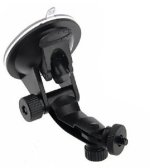
Because what you bought is pretty light weight, this inexpensive $4-$6 should serve you fine until you decide to upgrade next year. You'll be surprise how strong this little thing is in securing your camera if you mount it on a solid flat surface.

http://www.ebay.com/itm/BGP61-4-inc...431?pt=LH_DefaultDomain_0&hash=item54097307bf
 

Attachments

  • $_35.jpg
    $_35.jpg
    9 KB · Views: 83
Last edited:
Higher framerates dictate shorter shutter durations, which means less motion blur within any single frame, which also means that every single frame will be clearer.

I don't think that's necessarily the case. The camera's shutter speed is determined mostly by the amount of available light (as well as the lens aperture and sensor sensitivity). You could have the same shutter speed but different frame rates. Of course the frame rate places a lower limit on the shutter speed. If the frame rate is 60 fps, then the lowest possible shutter speed is 1/60 sec, and for 30 fps it's 1/30 sec. But if there is enough light, the shutter speeds could be exactly the same (e.g. 1/100 sec) for both frame rates, and the same amount of motion blur.

60 fps will play back more smoothly because the objects you're filming will move less between frames, not necessarily because of less motion blur with a higher frame rate.
 
I don't think that's necessarily the case. The camera's shutter speed is determined mostly by the amount of available light (as well as the lens aperture and sensor sensitivity).

Is that true for video modes? I've never seen any adjustment for shutter angle on the GoPro. I figured exposure comp was done via sensor gain, not by manipulating shutter duration/speed. Changing shutter speed during a shoot, would yiled varying amounts of motion blur & judder within a single clip as the ambient lighting conditions changed. It doesn't really work like that, does it?


You could have the same shutter speed but different frame rates. Of course the frame rate places a lower limit on the shutter speed. If the frame rate is 60 fps, then the lowest possible shutter speed is 1/60 sec, and for 30 fps it's 1/30 sec. But if there is enough light, the shutter speeds could be exactly the same (e.g. 1/100 sec) for both frame rates, and the same amount of motion blur.


I understand this, but I didn't think consumer video cameras worked like this, because people would be inclined to use shorter shutter angles to compensate for low light, and end up with juddery video. I was assuming (probably a bad idea) that the GoPro video modes would change the shutter angle based on selected framerate, not available light as the latter would yield considerably different aesthetics from one scene to the next.
 
Is that true for video modes? I've never seen any adjustment for shutter angle on the GoPro.

Toss on a ND filter on your gopro and it'll change the shutter speed. You can't manually set it, the gopro does it in its own.

Normally you want the shutter to be 2x that of the fps
30 fps should be shutter speed of 60
60 fps should be 120
Etc
 
Last edited:
Is that true for video modes? I've never seen any adjustment for shutter angle on the GoPro. I figured exposure comp was done via sensor gain, not by manipulating shutter duration/speed. Changing shutter speed during a shoot, would yiled varying amounts of motion blur & judder within a single clip as the ambient lighting conditions changed. It doesn't really work like that, does it?

I understand this, but I didn't think consumer video cameras worked like this, because people would be inclined to use shorter shutter angles to compensate for low light, and end up with juddery video. I was assuming (probably a bad idea) that the GoPro video modes would change the shutter angle based on selected framerate, not available light as the latter would yield considerably different aesthetics from one scene to the next.

You can't adjust the shutter speed manually in most video cameras (I think you can do it in high-end cameras like the Canon 5D Mark III or pro TV cameras). The camera automatically chooses the shutter speed it wants to use. Take a look at a video shot outside on a bright sunny day, and then at a video shot indoors in low light. You definitely get more motion blur in low-light situations. Adjusting just the sensitivity of the sensor (and keeping shutter speed constant) wouldn't give you enough range to go from shooting indoors at night (with typical lights), to shooting outside in the bright sun. That's a more than 1000x increase in brightness.

Also, if you shoot a regular photo camera in manual mode, and you try to shoot at 1/30s, you'll get a ton of motion blur on anything that moves fast. If video frame rate determined shutter speed, we wouldn't be able to shoot even people walking.
 
You can't adjust the shutter speed manually in most video cameras (I think you can do it in high-end cameras like the Canon 5D Mark III or pro TV cameras).

Again, I understand this, I was not clear on the GoPro and there seemed to be a suggestion that you could change it. That's why I asked.
 
Toss on a ND filter on your gopro and it'll change the shutter speed. You can't manually set it, the gopro does it in its own.

Normally you want the shutter to be 2x that of the fps
30 fps should be shutter speed of 60
60 fps should be 120
Etc

Yes. The normally" that you describe is a constant shutter angle (180˚) or speed. I'd assumed that this was the way a GoPro worked. If it did work this way, then doubling the framerate would indeed halve the shutter speed.

But what folks are saying here is that it does not work this way. Shutter speed will be adjusted dynamically based on metering, thus you will not have a reliable constant shutter speed when ambient lighting changes.
 
Back
Top