• There has been a recent cluster of spammers accessing BARFer accounts and posting spam. To safeguard your account, please consider changing your password. It would be even better to take the additional step of enabling 2 Factor Authentication (2FA) on your BARF account. Read more here.

Monkey enclosure?

I see what you did there. Appreciated đŸ€Ł

:laughing


I expect littlebeast to point out apes are not monkeys in a thread titled “monkey enclosure” when most of the discussion involves no monkeys.

Maybe it’s just me, the “poisonous” v “venomous” guy.

I'll bet the "?" and subsequent responses quelled any need to.... :dunno
 
How many of those animals are native to North America? Do they intend to return them to the wild after?

not sure the point of your first question - the community of organizations focused on wildlife conservation is very global, cooperative and 'all hands on deck' (e.g. china's approach to pandas). WRT your second question - the vast majority of animals in zoos were not born in the wild. therefore, 'return' is not a thing. that said, they are managed in such a way as to keep them as close to a 'wild' state as possible (habitat, feeding, enrichment, minimal direct human contact, etc.). there are repopulation programs though - but i don't have direct experience with any of them - and from what i understand, while the source animals are raised or rehabilitated in a captive environment, the facilities are definitely not a 'zoo'. even if a zoo does that type of work (IIRC, SD does that), those areas are not open to the public.
 
Last edited:
Don’t try to explain the concepts of zoos of today. People are still fixated on the old menagerie aspect.
I used to try to enlighten by explaining species and even an entire genera being brought back from the brink of extinction by captive propagation and management.

If it wren’t for the “Snake Houses” at zoos when I was a child, I would probably not have embarked on a lifelong quest for knowledge of them.

I was in a “Anatomy and Physiology of Marine Mammals” class at SFSU. It is an upper division class populated by most females, some who were there finishing up undergrad studies.
The subject came up of whales, dolphins and other cetaceans in captivity. I am on the fence about it for several reasons but sat there listening to them preach on the subject. The professor, not his first rodeo, sat calmly as some of these girls frothed at the mouth.
I asked this one question: “What made you want to become a marine biologist?”
The answer was: “I saw Shamu at Sea World when I was a little girl.”
The professor chuckled and gave the “There you go.” Face.

Triggered!
 
Don’t try to explain the concepts of zoos of today. People are still fixated on the old menagerie aspect.
I used to try to enlighten by explaining species and even an entire genera being brought back from the brink of extinction by captive propagation and management.

If it wren’t for the “Snake Houses” at zoos when I was a child, I would probably not have embarked on a lifelong quest for knowledge of them.

I was in a “Anatomy and Physiology of Marine Mammals” class at SFSU. It is an upper division class populated by most females, some who were there finishing up undergrad studies.
The subject came up of whales, dolphins and other cetaceans in captivity. I am on the fence about it for several reasons but sat there listening to them preach on the subject. The professor, not his first rodeo, sat calmly as some of these girls frothed at the mouth.
I asked this one question: “What made you want to become a marine biologist?”
The answer was: “I saw Shamu at Sea World when I was a little girl.”
The professor chuckled and gave the “There you go.” Face.

Triggered!

yeah - when i was younger, i’d respond in a fairly militant and aggressive way to conversations like this (including the ‘monkey’ differentiation lol). turns out a lot of people would rather cling to their assumptions and perceptions than educate themselves. it really only resulted in getting people’s hackles up - which makes it even harder to advocate for wildlife. as i’ve gotten older, i’ve toned it down, and just try to be informative regarding the key points. anyone truly interested in what modern zoos are doing (and have been doing for decades) should check out the AZA (association of zoos and aquariums) website, and particularly their SAFE (saving animals from extinction) program. they have links to their annual reports - which provide a lot of detailed info. am very proud that my zoo is in their top tier of contributors (visionary). zoos are like icebergs WRT what a visitor sees versus their mission, and what they actually do behind the public facing scenes.

https://www.aza.org/

AZA SAFE: Saving Animals From Extinction focuses the collective expertise within AZA-accredited zoos and aquariums and leverages their massive audiences to save species.

edit - just know your admission dollars are being put to great use. and maybe your interest will build into an active desire to protect wildlife. god knows, the wild world has suffered much at our hands (through exploitation and also ignorance), and can use all the help we can muster at this point.
 
Last edited:
Conservation is why I never bitch (ok, maybe a little) about paying the ever increasing admission at zoos like SD Zoo.
I know that having around 400 snakes and lizards in my own collection at one time was a ridiculous expense between food and electricity.
When I learned that cats can’t eat cows and need game meat or horses, I could see the $ signs spinning like a LV slot machine.

Imagine what zoos pay for vegetables, especially for specialized feeders, whilst these “shortages” are going on!

Another useless attempt at enlightening people is the occasional FB post of a “hunter” posing with one of the “Big 5”.
If some dude is willing to pay $5 million to shoot an elephant that is already marked for culling, thereby saving many more animals by financially supporting conservation at that game preserve, it’s win/win. Except for the elephant of course.
But people absolutely will not allow their minds to process this, let alone change. They just see big bad Elmer Fudd sitting proudly on a dead animal.
 
If you really want to see what modern zoos do there are a couple of good shows on one of the discovery type channels. I think one is Bronx zoo and the other is something Irwins. They give a really good inside view of the zoo and all the things they do that are not exhibits. One episode was about a rare african frog that only lives by this one waterfall and how the zoo built a special habitat for them and then once they got a certain population number they took some of the frogs back to Africa to put them in the wild and take them away from the brink of extinction. They also talk about how they rehabilitate wounded animals and then release them into the wild. So zoos are not just what we see as visitors.
 
In the defense of some

I remember SF zoo and that “monkey island” thing as a kid. Absolutely miserable. If that was your last impression and experience with a zoo, I totally understand.

Zoo habitats, nĂ© “enclosures”, are built now for the animals, not the visitors. When I visit zoos I hear the common complaint that “you can’t see anything”. Probably the way that animals prefer.
 
I went to a zoo that had an elephant. It was swaying back and forth which I found out is a sign of extreme boredom from being enclosed. This was in Australia about 20 years ago.
 
Since this drifted far enough away from monkeys, I will point out that knowing that there is, or were, over a dozen hyenas up by the Lawrence Hall of Science gives me daymares.

Hyenas scare me. The idea of going out for a bike ride or health run up in that area and being consumed by those other-wordly creatures is unacceptable.

Hyenas ONLY belong in Africa, goddammit. I really don't like them in the North East Bay, where I LIVE!

Edit update: I'll be damned, they went away and it was years ago. All that anxiety for nothin.....at least after the closure. I still imagine myself hikin at Wildcat and getting mobbed by those laughing demon-dogs-of-hell. I actually was encircled last summer by stupid coyotes alone on a cow trail and that bugged me enough to want to carry a pistol or something.

https://www.dailycal.org/2014/05/04/worlds-captive-hyena-colony-discontinued-due-lack-funding/

 
Last edited:
Since this drifted far enough away from monkeys, I will point out that knowing that there is, or were, over a dozen hyenas up by the Lawrence Hall of Science gives me daymares.

Hyenas scare me. The idea of going out for a bike ride or health run up in that area and being consumed by those other-wordly creatures is unacceptable.

Hyenas ONLY belong in Africa, goddammit. I really don't like them in the North East Bay, where I LIVE!

Edit update: I'll be damned, they went away and it was years ago. All that anxiety for nothin.....at least after the closure. I still imagine myself hikin at Wildcat and getting mobbed by those laughing demon-dogs-of-hell. I actually was encircled last summer by stupid coyotes alone on a cow trail and that bugged me enough to want to carry a pistol or something.

https://www.dailycal.org/2014/05/04/worlds-captive-hyena-colony-discontinued-due-lack-funding/

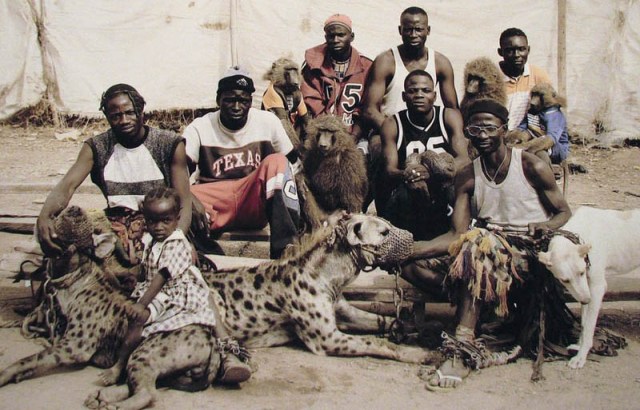
I presume in Nigeria, you just walk into a local PetCo and buy your pet supplies?

6e1f74e93e4b7f17ea5661f4238b082e.jpg


the-hyena-and-other-men-pieter-hugo-6.jpg


the-hyena-and-other-men-pieter-hugo-9_cover.jpg
 
Last edited:
Back
Top