

- Joined
- May 4, 2005
- Location
- Orinda, CA
- Moto(s)
- A funky red & white Italian named Gianni Cervo! Versys - two of 'em! And a Ducati for laughs.
- BARF perks
- AMA #: 281672
Shortly before the end of 2021, I picked up a V85TT, and now with ~3500 miles on it, and having completed its first overnight ride (3 days, 900+ miles), it seems like a good time to share some thoughts.
What the heck is a V85TT you ask? I'm not going to regale you with the 100 year history of Guzzi, what I will say is that I've had a weak spot for them since I saw and heard a Le Mans Mk. 1 ride by while I was walking to class at university. Then nearly 40 years ago, I rode the ancestor of this bike, the V65TT and wanted one bad, but couldn't put the funds together. It was an alternative to the R80 G/S.
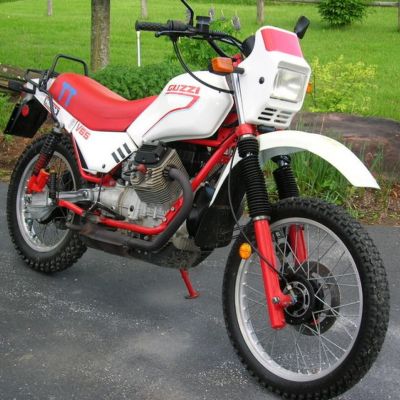
Since then, I've ridden the Stelvio and the Griso, and was favorably impressed by both, but went other directions when it came time to buy. When the V85TT came out I fell in love with the looks. Guzzi calls it a retro adventure bike - a category of one. A big part of the appeal to me is the simplicity and ease of access of an old school, aircooled, two valve, pushrod, v-twin combined with modern-ish suspension, electronics, and brakes. It had two more compelling characteristics. First, compared to something like a GS, it was cheap. Second, compared to something like a Tenere 700, it was actually available in dealers. To top it all off, lots of the reviews I saw were pretty positive, particularly about the capability of the chassis.
Hugo Wilson of Bike magazine attended the launch in Sardinia, and wrote this paragraph, which I think tees up the experience rather nicely:
The horsepower and torque numbers are at the crank. By the time it passes through the gearbox, shaft drive, and rear hub, the horsepower is more in the upper 60's. Cycle World's dyno runs showed the goose to have about 7 or 8 more rear wheel horsepower, and a similar margin in torque compared to my beloved 650 Versys. The goose is only a few pounds heavier than the Versys, so I expected a minor performance advantage.
Riding the goose can feel a bit odd, sort of like riding my old R1150R, and some of that oddness takes awhile to feel natural. You've heard the usual about torque effect, rocking side to side, and shaft drive jacking. All true.
While riding it the first thousand miles or so, and taking it easy until I did the first oil and filter change, the bike was kind of underwhelming. A few weeks after I bought it, a friend let me ride his brand new Triumph Scramber 1200 XE, and I really began to think I had made a mistake. That Scrambler rocks! All that suspension travel and a 21" front wheel, and it's still remarkably capable on a twisty road. Riding that bike had me thinking what bike would have to leave my garage in order to make room for it.
In the meantime, I kept riding the Guzzi, and slowly coming to grips with it, and eventually I had a three day ride scheduled, and it seemed like a good time to really shakedown the goose. That was a very good idea because it gave me enough concentrated seat time to figure out how the bike likes to be ridden.
In a word, deliberately. The bike rewards smoothness, and clear intent. If you're choppy and cack-handed, you and the goose will not get along. It doesn't mean that you can't ride it fast or aggressively, but you want to do it smoothly and with intent. If you do that - and let the engine rev - the performance is surprisingly good. Speaking of letting it rev, the redline is the lowest of any bike I've owned in a while - 6800 rpm. That said, CW got their peak HP number at 8000! Apparently, the rev limiter - if there is one - is set higher than redline plus 1200. The torque peak is around 5K, and that's when you really start making progress. Keep the thing on the boil, and it will get the job done. Compared to my beloved 650 Versys, there is more snap for overtakes, and I don't need to plan ahead so much to get past cars on a twisty road.
How does it handle? Really well, thank you very much. And, this is another case where it's just different feeling. This comes from a couple of things. First, every bike I've owned for more than ten years has had the same diameter wheels front an rear. In most cases, 17" on both ends, and in the case of my Enfield, 18". The goose is 19" front and 17" rear. Having 17's on both ends typically makes for a pretty quick turn-in (all other things being equal) compared to a bike with the front wheel larger than the rear. One other difference in feel comes from the front axle sitting higher off the ground than the rear axle. The sensation is hard to explain, but it is obvious when you experience it.
The second thing that makes the bike feel different is the "jacking" effect of the shaft drive. Because of the reaction of the pinion gear on the end of the shaft trying to "climb" the ring gear in the rear hub, when you accelerate the rear suspension extends, raising rear ride height, and when you shut the throttle the rear suspension collapses, reducing rear ride height. This does a ton of things, such as either reduce or increase cornering clearance depending upon throttle position. It also affects the attitude of the chassis, and can influence both how the bike turns in as well as how it completes a turn.
One example would be as the following: As you approach a turn, close the throttle, and begin to downshift and engine brake, the rear suspension will squat, increasing both rake and trail, and making the bike more reluctant to turn. If I counter that by carrying some front brake past the turn-in point, keeping the front suspension compressed, equalizing the impact on rake and trail, making the bike easier and more accurate to turn.
Once you're in the turn and begin to get back on the gas, the rear suspension will extend under acceleration, raising rear ride height, increasing cornering clearance, and sharpening both rake and trail, making it easier to complete the turn on your chosen line.
Keeping all of this in mind is the "deliberate" part of riding the goose. With so much going on, and so many interactions between controls, it's like the rider is the conductor of an orchestra calling on different instruments to coordinate and harmonize to get the effect you're after. When you do, the music is gorgeous. It's not hard, it just requires the rider to be aware and - here's that word again - deliberate. Oh, and smooth.
What I just described would not be everyone's cup of tea, and I get that. This falls more into the category of "it's more fun to ride a slow bike fast than a fast bike slow". Only, it's not all that slow. Steve and I picked off a lot of cagers on 25 last week, and I never felt like the goose was holding me back. Would I have been able to go faster on a (insert the name of your favored competitor to the V85TT here) than on the goose? Almost certainly. That said, my pace on public roads is more determined by sight distance and tolerance for speeding tickets than it is by the capabilities of the bike.
Other things? Okay, it's got a big tank, it requires premium, but it's pretty thrifty (routinely averaging over 50 mpg) except when riding fast on the freeway - especially with the tamale carts mounted on the side. They stick way out into the wind, and generate a fair amount of drag, so I try to keep them off the bike much of the time.
I love the cruise control. This is the third bike I've had with cruise, and it works better on this bike than it did on its predecessors.
I love the seat. Some reviews have complained about it. Seat comfort is a pretty individual thing, so what works for me may not work for you. Those of you who've ridden with me know that on longer stretches that I often stand up to give my butt a break. Last Sunday we were deep into the afternoon before I stood up for the first time.
The suspension is quite good. It has 6.8" of travel at both ends, meaning that it's quite pleasant on crappy road surfaces. It moves around a bit, but that's part of the fun. It's fairly well controlled.
A couple of things I don't like? Well, I don't care for the position of the rear brake pedal. I typically cover both brakes when I ride, but I can't get the rear brake lever low enough that I can avoid dragging the rear brake unintentionally. Not a huge deal, but I'm having to learn an accommodation. Second, it's very easy to unintentionally turn on the high beam. I thought that was BS when I read it in the reports, but then I had the same experience - repeatedly.
To sum up, I'm really digging this bike now. Some general pics follow.


Cases off the bike. They're good, but you can't fit a full face helmet in either.

If any of this sounds even vaguely appealing, get out for a demo ride on one. Until then, any questions?
What the heck is a V85TT you ask? I'm not going to regale you with the 100 year history of Guzzi, what I will say is that I've had a weak spot for them since I saw and heard a Le Mans Mk. 1 ride by while I was walking to class at university. Then nearly 40 years ago, I rode the ancestor of this bike, the V65TT and wanted one bad, but couldn't put the funds together. It was an alternative to the R80 G/S.
Since then, I've ridden the Stelvio and the Griso, and was favorably impressed by both, but went other directions when it came time to buy. When the V85TT came out I fell in love with the looks. Guzzi calls it a retro adventure bike - a category of one. A big part of the appeal to me is the simplicity and ease of access of an old school, aircooled, two valve, pushrod, v-twin combined with modern-ish suspension, electronics, and brakes. It had two more compelling characteristics. First, compared to something like a GS, it was cheap. Second, compared to something like a Tenere 700, it was actually available in dealers. To top it all off, lots of the reviews I saw were pretty positive, particularly about the capability of the chassis.
Hugo Wilson of Bike magazine attended the launch in Sardinia, and wrote this paragraph, which I think tees up the experience rather nicely:
The numbers are promising too. Guzzi claim 80HP, and peak torque at 5000 rpm. A five gallon (those are imperial gallons - slightly more than six US gallons - Kurt) fuel capacity for a range of over 250 miles. Seat height is 830mm. Claimed dry weight is 208kg, curb weight 229kg. Sure, it won't be a rocketship, but Moto Guzzis are for romantics and dreamers, travelers and poets, not horsepower addicts and cynics.
The horsepower and torque numbers are at the crank. By the time it passes through the gearbox, shaft drive, and rear hub, the horsepower is more in the upper 60's. Cycle World's dyno runs showed the goose to have about 7 or 8 more rear wheel horsepower, and a similar margin in torque compared to my beloved 650 Versys. The goose is only a few pounds heavier than the Versys, so I expected a minor performance advantage.
Riding the goose can feel a bit odd, sort of like riding my old R1150R, and some of that oddness takes awhile to feel natural. You've heard the usual about torque effect, rocking side to side, and shaft drive jacking. All true.
While riding it the first thousand miles or so, and taking it easy until I did the first oil and filter change, the bike was kind of underwhelming. A few weeks after I bought it, a friend let me ride his brand new Triumph Scramber 1200 XE, and I really began to think I had made a mistake. That Scrambler rocks! All that suspension travel and a 21" front wheel, and it's still remarkably capable on a twisty road. Riding that bike had me thinking what bike would have to leave my garage in order to make room for it.
In the meantime, I kept riding the Guzzi, and slowly coming to grips with it, and eventually I had a three day ride scheduled, and it seemed like a good time to really shakedown the goose. That was a very good idea because it gave me enough concentrated seat time to figure out how the bike likes to be ridden.
In a word, deliberately. The bike rewards smoothness, and clear intent. If you're choppy and cack-handed, you and the goose will not get along. It doesn't mean that you can't ride it fast or aggressively, but you want to do it smoothly and with intent. If you do that - and let the engine rev - the performance is surprisingly good. Speaking of letting it rev, the redline is the lowest of any bike I've owned in a while - 6800 rpm. That said, CW got their peak HP number at 8000! Apparently, the rev limiter - if there is one - is set higher than redline plus 1200. The torque peak is around 5K, and that's when you really start making progress. Keep the thing on the boil, and it will get the job done. Compared to my beloved 650 Versys, there is more snap for overtakes, and I don't need to plan ahead so much to get past cars on a twisty road.
How does it handle? Really well, thank you very much. And, this is another case where it's just different feeling. This comes from a couple of things. First, every bike I've owned for more than ten years has had the same diameter wheels front an rear. In most cases, 17" on both ends, and in the case of my Enfield, 18". The goose is 19" front and 17" rear. Having 17's on both ends typically makes for a pretty quick turn-in (all other things being equal) compared to a bike with the front wheel larger than the rear. One other difference in feel comes from the front axle sitting higher off the ground than the rear axle. The sensation is hard to explain, but it is obvious when you experience it.
The second thing that makes the bike feel different is the "jacking" effect of the shaft drive. Because of the reaction of the pinion gear on the end of the shaft trying to "climb" the ring gear in the rear hub, when you accelerate the rear suspension extends, raising rear ride height, and when you shut the throttle the rear suspension collapses, reducing rear ride height. This does a ton of things, such as either reduce or increase cornering clearance depending upon throttle position. It also affects the attitude of the chassis, and can influence both how the bike turns in as well as how it completes a turn.
One example would be as the following: As you approach a turn, close the throttle, and begin to downshift and engine brake, the rear suspension will squat, increasing both rake and trail, and making the bike more reluctant to turn. If I counter that by carrying some front brake past the turn-in point, keeping the front suspension compressed, equalizing the impact on rake and trail, making the bike easier and more accurate to turn.
Once you're in the turn and begin to get back on the gas, the rear suspension will extend under acceleration, raising rear ride height, increasing cornering clearance, and sharpening both rake and trail, making it easier to complete the turn on your chosen line.
Keeping all of this in mind is the "deliberate" part of riding the goose. With so much going on, and so many interactions between controls, it's like the rider is the conductor of an orchestra calling on different instruments to coordinate and harmonize to get the effect you're after. When you do, the music is gorgeous. It's not hard, it just requires the rider to be aware and - here's that word again - deliberate. Oh, and smooth.
What I just described would not be everyone's cup of tea, and I get that. This falls more into the category of "it's more fun to ride a slow bike fast than a fast bike slow". Only, it's not all that slow. Steve and I picked off a lot of cagers on 25 last week, and I never felt like the goose was holding me back. Would I have been able to go faster on a (insert the name of your favored competitor to the V85TT here) than on the goose? Almost certainly. That said, my pace on public roads is more determined by sight distance and tolerance for speeding tickets than it is by the capabilities of the bike.
Other things? Okay, it's got a big tank, it requires premium, but it's pretty thrifty (routinely averaging over 50 mpg) except when riding fast on the freeway - especially with the tamale carts mounted on the side. They stick way out into the wind, and generate a fair amount of drag, so I try to keep them off the bike much of the time.
I love the cruise control. This is the third bike I've had with cruise, and it works better on this bike than it did on its predecessors.
I love the seat. Some reviews have complained about it. Seat comfort is a pretty individual thing, so what works for me may not work for you. Those of you who've ridden with me know that on longer stretches that I often stand up to give my butt a break. Last Sunday we were deep into the afternoon before I stood up for the first time.
The suspension is quite good. It has 6.8" of travel at both ends, meaning that it's quite pleasant on crappy road surfaces. It moves around a bit, but that's part of the fun. It's fairly well controlled.
A couple of things I don't like? Well, I don't care for the position of the rear brake pedal. I typically cover both brakes when I ride, but I can't get the rear brake lever low enough that I can avoid dragging the rear brake unintentionally. Not a huge deal, but I'm having to learn an accommodation. Second, it's very easy to unintentionally turn on the high beam. I thought that was BS when I read it in the reports, but then I had the same experience - repeatedly.
To sum up, I'm really digging this bike now. Some general pics follow.
Cases off the bike. They're good, but you can't fit a full face helmet in either.
If any of this sounds even vaguely appealing, get out for a demo ride on one. Until then, any questions?
Last edited:


 arty
arty


