• There has been a recent cluster of spammers accessing BARFer accounts and posting spam. To safeguard your account, please consider changing your password. It would be even better to take the additional step of enabling 2 Factor Authentication (2FA) on your BARF account. Read more here.

School me on scuba

revnort

Tasty Pants
Joined
May 28, 2008
Location
The Sunny Mission, SF
Moto(s)
F800GS, Dr. Zoidberg
Name
Dan
BARF perks
AMA#: 1108597
I have always enjoyed snorkeling and have been toying with idea of getting certified to do open water diving. There are a couple classes nearby and diver Dan's in Santa Clara seems to be a good course. Any advice on the classes is appreciated.

I am hoping some people on the board dive and can give some general advice. I have done a tiny bit of research but I'm looking to get some info from those more experienced. I know with any hobby you can spend as much money as you want. Haha.

What gear should I really be looking for and what does getting good workable gear cost? It doesn't need to be top of the line but good starter stuff that I can work with for awhile and upgrade down the line. Am I looking at a grand or more just to get started?

I know I'll need a wetsuit for around here, but not if I'm going to be traveling to warmer climates.

I know I already want a good mask, snorkel and fins and have been shopping for those but I'm a newb so any advice there is appreciated. Do I want the same fins for snorkeling and scuba? Anything to look for with masks? I plan to go and try some stuff on mask wise at a dive shop so I know I have a good fit.

Anyway, any advice from those who know is greatly appreciated. Just looking for a little extra info before I dive in. Har har...that was bad.
 
Take the course first, then start shopping for stuff. During the course, you'll have the opportunity to try out different equipment, you might find you prefer certain types of gear. For example, some people prefer split fins versus regular fins, or diving masks with purge valves, different kinds of snorkels, etc.

In terms of what to buy first, I would recommend finding a good mask and snorkel that fits well and start from there. Are you planning on doing local dives once you're certified, or just when you're on vacation?
 
When you take your class, they'll give you tanks, BCD, regulator, and maybe a wetsuit too...........So all you need to buy is your own mask, snorkel, and fins.
 
When you take your class, they'll give you tanks, BCD, regulator, and maybe a wetsuit too...........So all you need to buy is your own mask, snorkel, and fins.

This... except, remember to ask how you pee underwater... that'll get you to buy your own wetsuit quickly. :laughing I don't have my own regulator and BCD any more, since I do not dive as much as I used to, so when I do go scuba diving, I rent. You will benefit from having a diver's watch to help you keep track of depth and time underwater.

A dive computer is helpful if you decide that using the dive table for calculations is too annoying. :)

Then there's this thread.

A friend took her open water certification at Diver Dan's... they've got their own indoor pool, which helps a lot for the pool sessions. They have a nice selection of gear available and some pretty cool people that are very knowledgeable about gear selection.
 
My daughter got her cert from Wayne Mitchell (mitchellscuba.com) in San Bruno. Good guy. A bit old school, and not even remotely PC. :laughing The format for most PADI and NAUI courses seems to be similar. 1 weekend of classes and pool, 1 weekend at the Ocean. I've heard good things about GUE classes as well, but I'm less familiar with those guys; I think there may be some BARFers affiliated with them. Whichever course provider you end up with, a quality instructor makes a big difference.

After instruction, find a good dive buddy that you can develop some trust with; not everyone that's a diver is a good dive buddy.

I'll generally +1 on waiting for gear purchases. When you don't know what's what, it's easy to spend a lot of coin on stuff you may not like. Turbo busa, you know.
 
I have always enjoyed snorkeling and have been toying with idea of getting certified to do open water diving. There are a couple classes nearby and diver Dan's in Santa Clara seems to be a good course. Any advice on the classes is appreciated...

...Anyway, any advice from those who know is greatly appreciated. Just looking for a little extra info before I dive in. Har har...that was bad.

:)
 

Attachments

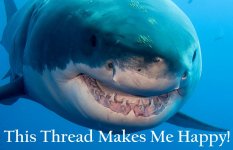
  • Happy Whitey.jpg
    Happy Whitey.jpg
    141.8 KB · Views: 17
Take the course first, then start shopping for stuff. During the course, you'll have the opportunity to try out different equipment, you might find you prefer certain types of gear. For example, some people prefer split fins versus regular fins, or diving masks with purge valves, different kinds of snorkels, etc.

In terms of what to buy first, I would recommend finding a good mask and snorkel that fits well and start from there. Are you planning on doing local dives once you're certified, or just when you're on vacation?
Ideally I'd do both. I'd like to dive here and when traveling.
When you take your class, they'll give you tanks, BCD, regulator, and maybe a wetsuit too...........So all you need to buy is your own mask, snorkel, and fins.
Yeah I figured... any suggestions or guidance on what to look for with those? Haha I'm looking but no idea on what I want or need.
This... except, remember to ask how you pee underwater... that'll get you to buy your own wetsuit quickly. :laughing I don't have my own regulator and BCD any more, since I do not dive as much as I used to, so when I do go scuba diving, I rent. You will benefit from having a diver's watch to help you keep track of depth and time underwater.

A dive computer is helpful if you decide that using the dive table for calculations is too annoying. :)

Then there's this thread.

A friend took her open water certification at Diver Dan's... they've got their own indoor pool, which helps a lot for the pool sessions. They have a nice selection of gear available and some pretty cool people that are very knowledgeable about gear selection.
Cool thanks for the info. Watch and\or computer huh. Those look expensive:cry:laughing Thanks for that other thread. I'll have to do some reading:thumbup
My daughter got her cert from Wayne Mitchell (mitchellscuba.com) in San Bruno. Good guy. A bit old school, and not even remotely PC. :laughing The format for most PADI and NAUI courses seems to be similar. 1 weekend of classes and pool, 1 weekend at the Ocean. I've heard good things about GUE classes as well, but I'm less familiar with those guys; I think there may be some BARFers affiliated with them. Whichever course provider you end up with, a quality instructor makes a big difference.

After instruction, find a good dive buddy that you can develop some trust with; not everyone that's a diver is a good dive buddy.

I'll generally +1 on waiting for gear purchases. When you don't know what's what, it's easy to spend a lot of coin on stuff you may not like. Turbo busa, you know.
Yep. Even the basics can vary widely in prices. I figure I can use good quality basics regardless but I'm hoping to find out the sweet spot for money to quality ratio. I'm hoping the lady friend will be the dive buddy, but more is always better :)

Ha. I think it would be awesome to see a shark. I might shit myself but it would be awesome.
 
Last edited:
I highy recommend Any Water Sports in San Jose. There's one guy there that kinda sucks to write with but he's still knowledgeable. Everyone else there is awesome. My girlfriend and I both got certified through them. They dive in the San Jose state pool and then Monterey. Every time we go in now (once a year) they remember us and always give great deals on gear.

Go to the class before you buy anything. They'll teach you to size things, tell you what you need and probably give you a discount on everything, since you're doing training through the shop.
 
Dan, my only advice would be to do it. Do it ASAP. SCUBA is such an amazing experience, and there is amazing diving all over the world. I don't go nearly often enough, but whenever I do get out for a dive I absolutely love it.
 
Probably one of the most dangerous things you can do, besides going into space. There is little one can do to save you if something goes wrong. So, learn it, learn it well. Take the necessary precautions, and get certified. It's an absolute blast!
 
It is rad. You usually only catch them swimming away though... or, in my case, sleeping in/under a rock.

White Sharks don't do that. They never stop roaming the ocean in search of hugs.

A0MMzd5CQAIH2P-.jpg:large
 
Probably one of the most dangerous things you can do, besides going into space. There is little one can do to save you if something goes wrong. So, learn it, learn it well. Take the necessary precautions, and get certified. It's an absolute blast!

You can always just swim to the surface if things go wrong. Most people stay in open water, and less than 80 feet depth. Most diving tables are conservative and show depth/time limits well within no-decompression limits. It's really not very dangerous.
 
Scuba is tons of fun, a good excuse to travel and a great way to meet people who like adventure.

That being said, yes, you'll need to drop more than a grand. Yes, you'll need different sets of fins for scuba vs snorkeling. Hell, I think I have six sets. If you find you enjoy it, just like motorcycles the sky is the limit for the amount of $ you can spend. You can save lots of money buying lightly used gear. I think I have a pretty nice reg set sitting around that I would let go fairly reasonably. I might even have an extra computer.

Spend the money on a really good mask that fits properly. IMHO that is your most important piece of gear. Then your regulator set up.

Most of the cert courses are the same. The criteria is the same and the ocean is the same. The instructor and the classmates make the course. Its really just something to get through so you can get to the real diving with friends you can TRUST.

Don't just go diving with someone who says "Hey, I'm certified, lets go diving" things can go wrong really fast if you're with the wrong people.
 
You can always just swim to the surface if things go wrong. Most people stay in open water, and less than 80 feet depth. Most diving tables are conservative and show depth/time limits well within no-decompression limits. It's really not very dangerous.

Sorry I gotta agree with mseth here. Diving is like bikes, you can be in control of your risk exposure with training and experience. But when things go wrong they do so in a hurry. Whilst I admit it was 20 years ago since I dove actively, I was an AD back in the UK (dunno what that is here - Padi master?) and logged about 400 hours. Helped the RNLI with body recovery on two occasions - one of which got me bent and I spent a day in the pot at Fort William.
I have no experience diving here stateside, can't offer any advice other than find a good instructor who takes safety as a priority.

Coolest dive I ever did was in the middle of a photoplankton bloom at night - imagine total darkness with little points of light coming from the plankton when they get disturbed - big whishy light trails coming from your buddies fins, light spots on your mask faceplate.. super cool.
 
Scuba is tons of fun, a good excuse to travel and a great way to meet people who like adventure.

That being said, yes, you'll need to drop more than a grand. Yes, you'll need different sets of fins for scuba vs snorkeling. Hell, I think I have six sets. If you find you enjoy it, just like motorcycles the sky is the limit for the amount of $ you can spend. You can save lots of money buying lightly used gear. I think I have a pretty nice reg set sitting around that I would let go fairly reasonably. I might even have an extra computer.

Spend the money on a really good mask that fits properly. IMHO that is your most important piece of gear. Then your regulator set up.

Most of the cert courses are the same. The criteria is the same and the ocean is the same. The instructor and the classmates make the course. Its really just something to get through so you can get to the real diving with friends you can TRUST.

Don't just go diving with someone who says "Hey, I'm certified, lets go diving" things can go wrong really fast if you're with the wrong people.

So how do you know who is a good person to dive with? Should I try to get people I know to sign up too who I think would be responsible and good dive buddies? It does seem moto riders like to dive haha. Reading the responses here and the other dive thread have me both excited and intimidated. Lots of training and lots of gear choices. Then add the danger of it and all...seems fun. :teeth
 
Last edited:
So how do you know who is a good person to dive with? Should I try to get people I know to sign up too who I think would be responsible and good dive buddies? It does seem moto riders like to dive haha. Reading the responses here and the other dive thread have me both excited and intimidated. Lots of training and lots of gear choices. Then add the danger of it and all...seems fun. :teeth

It is fun!

Try to go diving with people who have more experience than you for starters. Its actually a lot like riding motos. When you first start, you can't tell a fast old dude from a squid but after a little experience you can spot the dangerous ones a mile away. For me its was always about the attitude. The guys who brag about how deep they've gone as a recreational diver is a really good cue for me. Talk story, ask intelligent questions and gauge the responses with your bullshit meter. Also where they've dove so far. Check out dives and vacation dives in the warm water only? Probably can't even carry their own gear.

Speaking of gear, they guy with all new gear? Stay away from that guy unless he has a great story like his dive bag was stolen and he had to replace all his shit all at once and he really misses those fins or that mask, lol
 
1204_10151348919256380_1609977278_n.jpg

530845_10151348923556380_1720671090_n.jpg

67984_10151349952911380_1042609201_n.jpg


Here is me in Akumal Mexico, south of Cancun. I'm not certified, I just walked down the beach and said "Hey, I want to SCUBA". I watched a video, had one on one pool dive and a boat ride to the reef with a guide that took these photos.

It was really cheap, the instructors were better than when I did it once before in Hawaii and they had all the gear. The diving was one of the best in the world.

I found the concept of controlling your buoyancy with the amount of air in your lungs really interesting. The only thing that I think I did wrong was accidentally slipping a weight off the weight belt when I getting onto the boat.

For myself, I would only want to dive in tropical places were the water is clear. I don't think it would be fun to dive around here were it is colder, less life and hard to see.

The only reason I would get a certification is to go deeper and do caves. On the Yucatan Peninsula there are a lot of Cenotes, which are underwater caves that are Holy to the Myan People. I snorkeled at Dos Ojos, which is about 400ft deep underwater and it looked really fun to dive and the fresh water is crystal clear.


[youtube]4XD03bNp6dY[/youtube]
 
Sorry I gotta agree with mseth here.

Hate to repeat myself, but the majority of dives take place at around 30-60 feet in open water, and are around 45 minutes long. If you have a problem, you can always go to the surface in a hurry. It's not the same thing as body recovery or commercial gigs, and it's really pretty safe, for the most part. Injury/death is quite rare for general recreational divers. I was certified when I was 12. If they are letting 12 years do it, it can't be that dangerous.

Caves/depth/trimix shit is, of course, an entirely different ball of wax. But that kind of shit isn't really that fun anyway, the most fun dives are when you are only 30 feet down because then you can actually see everything.
 
Back
Top