• There has been a recent cluster of spammers accessing BARFer accounts and posting spam. To safeguard your account, please consider changing your password. It would be even better to take the additional step of enabling 2 Factor Authentication (2FA) on your BARF account. Read more here.

Lap Timer questions

The $20 solution with the Walmart burner phone coupled with Harrys Laptimer software worked outstanding for a laptimer, and having the behind/ahead split indicator that I could see while at speed was exactly what I was looking for.

For me it was a 9/10, hoping to get a detailed review of the setup in use over the Z2 Thanksgiving weekend posted up here "soon"

Keep in mind that ALL phone GPS units are 1hz which means one update per second. On the track that will give your lap times +/- one second but won't give you detailed information to compare laps, etc.

Cheaper yes, but in this case you really do get what you pay for.
 
Right, but as SonoraMike mentioned above, you can integrate the app with an external GPS tracking device and still be way ahead in money savings. That will allow for more accurate readings at speed. I've read a little about this in some other forums, but can't vouch for it yet. Maybe this year I will be back to paying attention to my lap times and update this thread with results on accuracy of the app. Mike, if you can do that too, it would be great to have a writeup here.
 
yea, Mike is spot on above. Yes, at 1hz resolution the $20 setup as is serves well only as a lap timer with split indication (and a huge thumbs up for this feature). So if you are only looking for a great laptimer solution then this is your ticket.

You can dump the cruddy 1hz data out to Racelogic and get a feel for what more accurate data will give you. More on that coming.

I'm working on an Arduino based 20hz GPS/baro/temp/altitude/3axis accelerometer and gyro with data logging and bluetooth to enhance the burner phone setup logging and capture capabilities.

Cheaper yes, but in this case you really do get what you pay for.

Marc, you might want to dig into it before you knock it so you know exactly what you're knocking, I think you'll be pleasantly surprised. You get much more than you think with this setup, along with the ability to add accuracy on if you want to dig into numbers/charts/graphs via inexpensive standalone BT GPS units.

Keep in mind that ALL phone GPS units are 1hz which means one update per second. On the track that will give your lap times +/- one second but won't give you detailed information to compare laps, etc.

Incorrect. +/- 1/10

And you can get detailed info to compare laps. Will the data be as good as a 5/10/20hz unit? Of course not, but you can choose how accurate you want it to be by buying the GPS unit that suits you
 
Last edited:
While you can certainly get better than 1s resolution from a 1Hz device through interpolation (and I have no idea if Harry's interpolates fixes), I'm curious how you arrvived at that number?

my usual poor memory got me in the ballpark

At 4 meters accuracy, and typical speed characteristics for start / finish lines, this results in accuracy better than 0.05 seconds for 1 Hz devices

http://www.gps-laptimer.com/TrainTheTrainer-Harrys.pdf slide 12/25

and on the triggers doc at http://www.gps-laptimer.com/LapTimerDocumentation - Points of Interest and Triggers.pdf he explains

Interpolation
As GPS does not deliver positions continuously, but as distinct fixes with a certain update rate (e. g. 1 Hz), the fix will be
never ‘on’ the POI position. Instead, it will be slightly before or after the POI. To make things a little more complicated, it will
be slightly to the left or right too.
To get timing accuracy beyond update rates, LapTimer does sophisticated interpolation to calculate the actual point and
time the start / finish line / trigger has been passed. To accomplish this, LapTimer calculates the trigger‘s perpendicular
projection to the virtual line between the GPS fix before and the GPS fix after the trigger. Having calculated this point, the
time this point was passed is calculated by linear interpolation from the speed at the fix before, the speed at the fix after, and
the distance between these two points. As long as the speed development is nearly linear, this interpolation yields accuracy
beyond 0.01 seconds. This is the reason why even receivers with 1 Hz update rate are sufficient for timing popular track
days.

Here is a list of accuracies typically achieved. Please note accuracy reported by GPS sensors are statistic values achieved
95% of the time. You need to expect deviations from the named accuracy accordingly.
• iPhone3G's and 3GS's internal GPS: better than 0.5 seconds (not recommended)
• iPhone4’s, 4S’s, and 5’s internal GPS: better than 0.1 seconds
• Any iPhone directly integrated with a supported external sensors (see www.gps-laptimer.de/Compatibility.html): around
0.05 seconds, 5 Hz device better than 0.05 seconds

 
Last edited:
Hey Mike, I'd be curious to follow along with your project. Any webpage/github/etc with more info?
 
Hey Mike, I'd be curious to follow along with your project. Any webpage/github/etc with more info?

not at the moment, I'm just diving in*. I have the following:

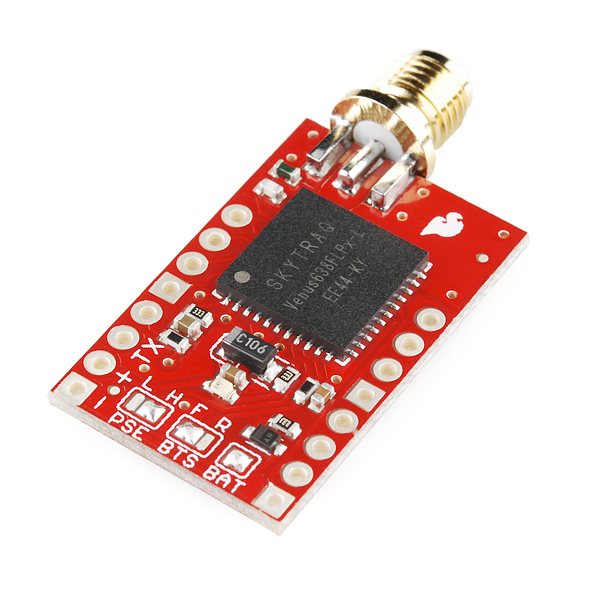
The 20hz Venus GPS:
11058-01.jpg


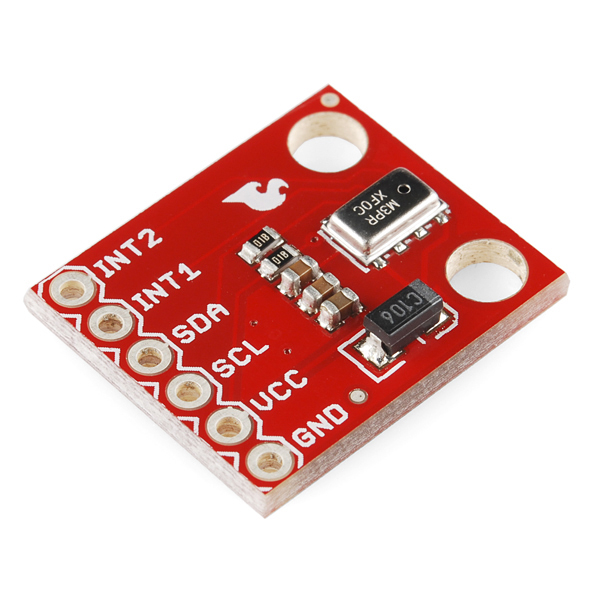
The altitude and pressure sensor:
11084-01.jpg


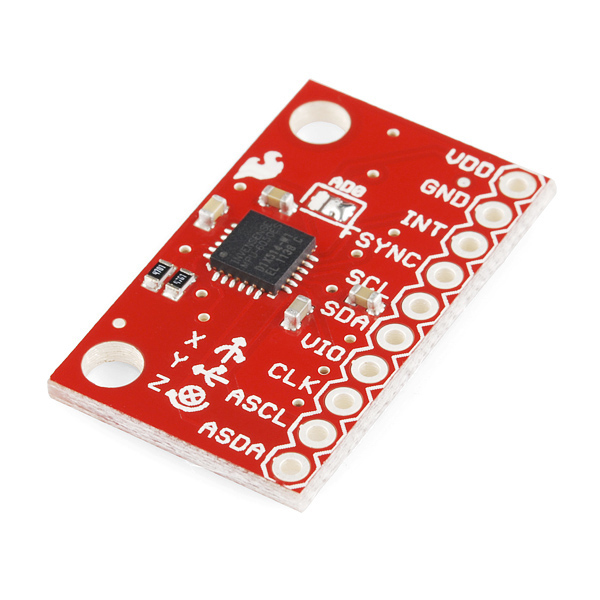
3 axis Gyro and 3 axis Accelerometer for lean angles, etc :
11028-01.jpg


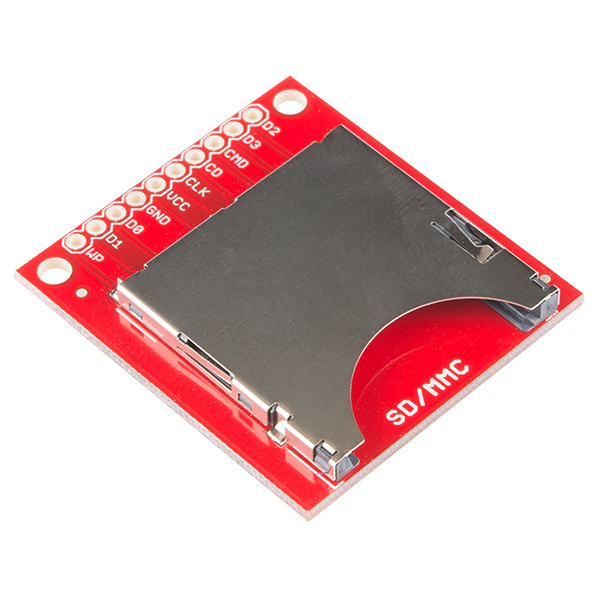
SD card storage:
12941-01.jpg


An Arduino Mega256:
11061-01c.jpg


need the BT module still to connect it to the burner phone for GPS, but the phone is a new addition to the build list

I also purchased the CAN board, but I'm not sure how I'm going to use this on my bike yet, have to figure out how to grab throttle position, ignition, gear, etc from the wiring harness without affecting existing systems. No stock OBD port

Going to be using string potentiometers initially to measure suspension travel, but trying to work some sort of tube container out to shield the wire/string from the wind to keep the readings in the ballpark.

Still need to work on sourcing wheel speed sensors.

The Mega256 has enough channels to grab all the inputs I have my eye on at the moment, the suspension inputs are just fast enough at 250hz, and the odds and ends can come in via the CAN board.

Studying Andrews blog at http://www.datamc.org/ for more info. He hasn't posted since mid Oct so looking fwd to the next installment

But, first things first... Need to replace the crank on the R1 I snapped over Tgiving weekend and get the bike running... Pulling the flywheel is giving me fits, 1 hardended bolt and 1 three jaw puller have not been up to the task so far. I keep waving the cutting disc in front of it in a threatening manner, 1 more 3 jaw puller with torch to go before I cut it off

* I've only had the parts since June of 14, so not nearly enough time to get into it

Planning on starting a new thread for the accountability I need on moving fwd with the project

/threadjack
 
Last edited:
Marc, you might want to dig into it before you knock it so you know exactly what you're knocking, I think you'll be pleasantly surprised. You get much more than you think with this setup, along with the ability to add accuracy on if you want to dig into numbers/charts/graphs via inexpensive standalone BT GPS units.

I went the phone/bluetooth route for a while and ended up tossing it. I hope you have better luck.

The issue I ran into was reliability.

1. Harry's, while a great bit of kit, was unreliable for me. Sometimes crashing, sometimes just not logging data.
2. The connection to the bluetooth was inconsistent. Sometimes it worked, sometimes it didn't.
3. Two battery based devices -- that I will forget to charge :/

Some of that is user error, some of it is physics. I have a box of lap timers and gps units that I went through before I jumped up to a dedicated unit and have minimal problems since.

I think the phone/bluetooth/gps is a dead-end but I am happy to be wrong :)
 
not at the moment, I'm just diving in*. I have the following:

...

i had a hard time getting enough performance out of a single-threaded slow Arduino to manage all those sensors and the SD card. it couldnt reliably grab all the data, do some math on it, and fill the SD buffer or write without lagging and missing data. perhaps ull have better luck. i moved my project to a Parallax Propellor and am a lot happier.
 
i had a hard time getting enough performance out of a single-threaded slow Arduino to manage all those sensors and the SD card. it couldnt reliably grab all the data, do some math on it, and fill the SD buffer or write without lagging and missing data. perhaps ull have better luck. i moved my project to a Parallax Propellor and am a lot happier.

I came to the same conclusions and found prototyping much faster on a BeagleBone Black where I can use much higher levels tools such as sqlite and python. Not to mention the huge benefit of having access to a proper debugger.
 
Last edited:
heh. I'm more of a fan of the Teensy 3.x series. It's ARM based, has built in CANBus support, is Arduino compatible and only $20. But different strokes for different folks. :)

Honestly, I'd highly recommend looking at RaceCapture/Pro mk2 if you're considering the DIY route. Once you consider the cost of your time, and the fact it already has an existing user base/community makes it a real no brainer IMHO.

But do as I say, not as I do... I'm in the process of installing my AiM MXL2.
 
heh. I'm more of a fan of the Teensy 3.x series. It's ARM based, has built in CANBus support, is Arduino compatible and only $20. But different strokes for different folks. :)

Honestly, I'd highly recommend looking at RaceCapture/Pro mk2 if you're considering the DIY route. Once you consider the cost of your time, and the fact it already has an existing user base/community makes it a real no brainer IMHO.

But do as I say, not as I do... I'm in the process of installing my AiM MXL2.

The reason I started dabbling with it was that I wanted an always-on system that would wirelessly sync over the data to my iPad.

And the RaceCapture thing....2lbs!?! Did they put lead in it?
 
I bet that's the shipping weight. If that's a killer, I'd ask on their forums. To be fair though, the footprint seems better suited to cars then bikes, but some bikes have more/less room then others.

Btw, you could easily add something like an ESP8266 to one of the serial ports of the RC/Pro and stream data to your iPad.

Anyways, we've totally hijacked the OP's thread. Probably should start one up in the Garage for custom electronic projects.

And here's the thread: http://www.bayarearidersforum.com/forums/showthread.php?p=9284709
 
Last edited:
Back
Top