
-
There has been a recent cluster of spammers accessing BARFer accounts and posting spam. To safeguard your account, please consider changing your password. It would be even better to take the additional step of enabling 2 Factor Authentication (2FA) on your BARF account. Read more here.
You are using an out of date browser. It may not display this or other websites correctly.
You should upgrade or use an alternative browser.
You should upgrade or use an alternative browser.
Oroville dam spillway damaged
- Thread starter teg916
- Start date


Climber
Well-known member
I'm sure it's true. Cavitation can happen even with a load, they just want to minimize it. Fluid dynamics is a specialized area of ME just as chip design is a specialized area of EE.hey man, all I know is I've been told it is bad for the turbine to spin with no load.

JackTheTripper
Shotline For Mod
When is the last time a town in the US has had to evacuate? Katrina?
What about that fire up in the north bay last year or year before? Didn't they evacuate the whole town?

SuperMike
just doesn't get it
- Joined
- Apr 30, 2006
- Location
- Old Marsh Creek Springs
- Moto(s)
- 1969 Honda CT90, 2008 KTM SuperDuke 990
- Name
- o_O
- BARF perks
- AMA #: 2815988
What about that fire up in the north bay last year or year before? Didn't they evacuate the whole town?
Middletown? Yeah.

[/QUOTE]Before

After

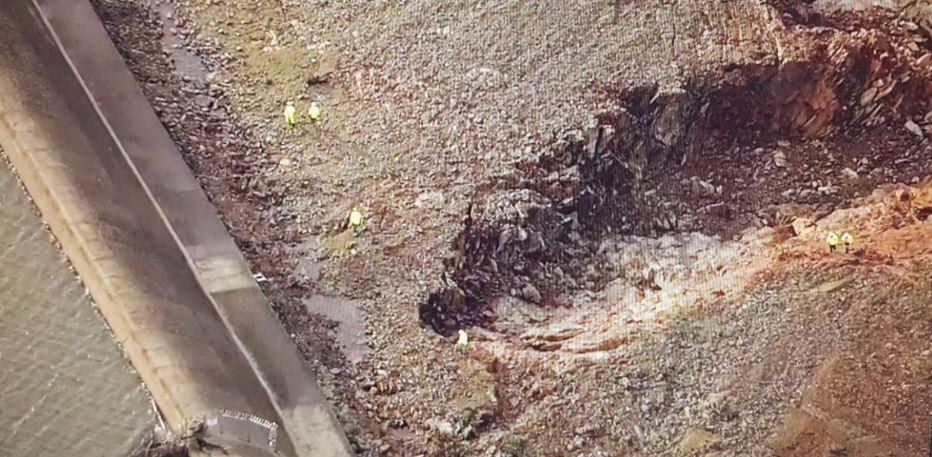

that is a shit design if you actually expect water to ever flow over the emergency spillway.


Stormdragon
Still Good Lookin'
- Joined
- Feb 12, 2006
- Location
- Cool, (yes, really!) CA
- Moto(s)
- XT600, ZX636, KR250, RS90
- Name
- El Diablo
I understand not wanting a bunch of detritus going down the river.
What I don't understand, is stripping all the plant matter that might have kept the erosion to a minimum.
And no, I did not stay at a Holiday Inn last night.
What I don't understand, is stripping all the plant matter that might have kept the erosion to a minimum.
And no, I did not stay at a Holiday Inn last night.

Smash Allen
Active member
that is a shit design if you actually expect water to ever flow over the emergency spillway.
it's done on purpose as a stop-gap measure to provide more time (think 2+ hours instead of 1) to evacuate in a worst-case scenario. the whole ridge of the dam and spillway and emergency spillway is anchored in to bedrock. the emergency spillway is anchored to weather bedrock, which will go bye bye in a 250+ flow event. they are currently dumping 100k down the main spillway but will be lowering it as the reservoir level continues to drop. watch the rain, it's going to be close.

MrIncredible
Is fintastic
I understand not wanting a bunch of detritus going down the river.
What I don't understand, is stripping all the plant matter that might have kept the erosion to a minimum.
And no, I did not stay at a Holiday Inn last night.
Said plant matter would've been stripped either way, and if it went down the river it would potentially clog things up and cause backups.
They did the right thing.
I understand not wanting a bunch of detritus going down the river.
What I don't understand, is stripping all the plant matter that might have kept the erosion to a minimum.
And no, I did not stay at a Holiday Inn last night.
Unless they took the roots too, it's still anchoring the soil, but now without a big lever attached to help rip out said roots
it's done on purpose as a stop-gap measure to provide more time (think 2+ hours instead of 1) to evacuate in a worst-case scenario. the whole ridge of the dam and spillway and emergency spillway is anchored in to bedrock. the emergency spillway is anchored to weather bedrock, which will go bye bye in a 250+ flow event. they are currently dumping 100k down the main spillway but will be lowering it as the reservoir level continues to drop. watch the rain, it's going to be close.
You sound smart. I still think it's a shit design, but I recognize I don't know all the details thus might be Alternatively Correct
that is a shit design if you actually expect water to ever flow over the emergency spillway.
It is kind of like having an emergency brake on your car that will light it on fire if used. Sure, your car will burn to the ground, but at least it will stop.


Tharkûn
Freeway Moderator
Quite a bit of rain starting late tonight
Talking TV heads are saying ~ 2.5" of rainfall for the area this next set of storms. People seem to be relaxing a bit, but they're still working like mad on the spillway. Hope Ma Nature cooperates. Oh ya, and one more thing... death to looters.

- Joined
- Nov 25, 2003
- Location
- West Sacramento, CA
- Moto(s)
- 2012 Street Triple r,
DRZ400SM, KTM 450SMR, YZ250F (still parting out),
- Name
- Steve
It is kind of like having an emergency brake on your car that will light it on fire if used. Sure, your car will burn to the ground, but at least it will stop.
This. Sort of.
The emergency spillway was designed to be used in the event of catastrophic conditions to keep water from overtopping the main dam. Designers knew the hillside would erode and it was likely seen as a reasonable tradeoff compared to uncontrolled release over the dam which is to be avoided at practically any cost.
I think people are looking at this wrong. Northern California is in the middle of a natural disaster. This disaster is taking place over a matter of months rather than a few minutes like an earthquake. Doesn't make it any less of a natural disaster. This rainy season may end up having the highest rainfall on record. The flood control system is actually working well so far. We are in no way out of the woods yet, but catastrophic damage has been avoided.
Twenty (1997) or thirty (1986) or more years ago these conditions would probably have caused devastating flooding throughout the Central Valley and foothills. There would have been extensive damage, loss of life, tremendous economic impact and significant interruptions in water delivery to most of the state, including the Bay Area.
We actually are spending money on infrastructure. Billions have been spent in the last decade to improve and maintain levees and manage flood zones. The levees near my house in West Sacramento have had regular maintenance and improvements over the nearly 15 years I've lived here. Over a billion dollars has been spent in the Sacramento area to meet 100-year, 200-year and even 300-year flood protection standards. Hundreds of millions more have been authorized for further improvements as part of a national water bill passed by congress and signed by Obama earlier this year.
Of course the issues at the Oroville Dam should be reviewed and there is always room for improvement but I think its just as important to look at the big picture stretching across decades as it is to focus on this one event.
I'll reiterate that we cannot claim to have dodged a bullet yet. Many of the state's largest reservoirs are at or near capacity, levees are strained and the rainy season is far from over. There is still the very real possibility of catastrophic infrastructure failures and flooding and danger to millions of people. Tens of millions will be spent over the coming months and years repairing roads, levees and other infrastructure as a result of the rains we've seen this winter. Lets just hope this extremely complex system spanning hundreds of dams and thousands of miles of levees keeps working as well as it has.
Last edited:
Smash Allen
Active member


FXCLM5
bombaclaud
 for your track bike
curious was the oroville evac published nationwide on the news or just in the bay area?
curious why trump has not made some stinky tweet - like im burning the guys career down for not knowing the report from 12+ years ago
curious why trump has not made some stinky tweet - like im burning the guys career down for not knowing the report from 12+ years ago
- Joined
- Nov 25, 2003
- Location
- West Sacramento, CA
- Moto(s)
- 2012 Street Triple r,
DRZ400SM, KTM 450SMR, YZ250F (still parting out),
- Name
- Steve
curious was the oroville evac published nationwide on the news or just in the bay area?
curious why trump has not made some stinky tweet - like im burning the guys career down for not knowing the report from 12+ years ago
It was international news.
FXCLM5
bombaclaud
It was international news.
no tweets?
shame on you trump - praying for arnold.
did anybody see arnolds response? he basically said trump lets trade jobs

Schnellbandit
I see 4 lights!
Over 150,000 were evacuated or under evacuation orders. One guy got run over by someone who stole his truck as he was preparing to evacuate.
Not a single protest over any of it but then again look who did nothing to fix it for last 8 years.
That moron of the goon platoon Brown sat there and griped his was through the press conference telling everyone how he and all his cronies were there for the people and doing everything possible to insure the safety of people.
150,000+ people out of house and home no big deal. 60,000 inconvenienced temporarily by not being allowed into the US and protests all over the place.
Not a single protest over any of it but then again look who did nothing to fix it for last 8 years.
That moron of the goon platoon Brown sat there and griped his was through the press conference telling everyone how he and all his cronies were there for the people and doing everything possible to insure the safety of people.
150,000+ people out of house and home no big deal. 60,000 inconvenienced temporarily by not being allowed into the US and protests all over the place.

wazzuFreddo
WuTang is 4 the children
Over 150,000 were evacuated or under evacuation orders. One guy got run over by someone who stole his truck as he was preparing to evacuate.
Not a single protest over any of it but then again look who did nothing to fix it for last 8 years.
That moron of the goon platoon Brown sat there and griped his was through the press conference telling everyone how he and all his cronies were there for the people and doing everything possible to insure the safety of people.
150,000+ people out of house and home no big deal. 60,000 inconvenienced temporarily by not being allowed into the US and protests all over the place.
Go get your f'n shine box