• There has been a recent cluster of spammers accessing BARFer accounts and posting spam. To safeguard your account, please consider changing your password. It would be even better to take the additional step of enabling 2 Factor Authentication (2FA) on your BARF account. Read more here.

San Francisco

The Ramp was one of the few "hidden gems". I used to go there for live bands. Food was always just a little better than you expected.

Many smaller pants sizes ago, when there was more hair on my head, Sam Jordan's was the spot. But there were many of those spots. In each neighborhood, there was some little place, where everything and everyone in the place felt just right.
 
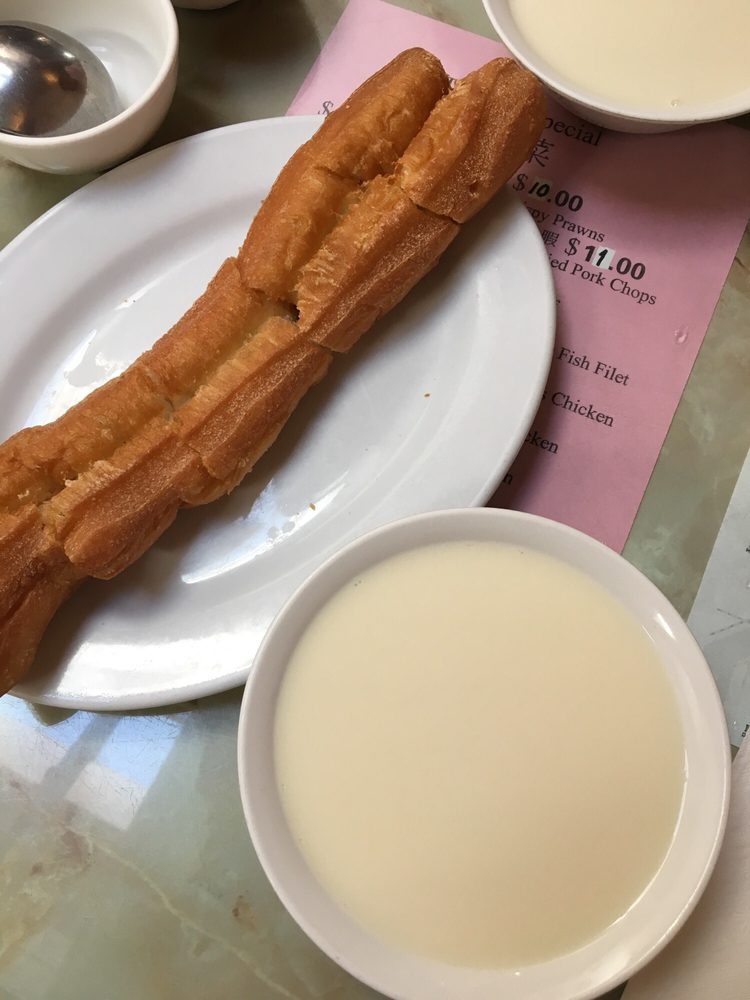
the hard-to-find ngau lei so in the window. I got excited but when I sat down and ordered it along with a bowl of jook, the waiter told me they don’t serve jook


ox-tongue-pastry.jpg

At Taiwan Restaurant, it's typically served with soy milk.

Screenshot 2022-02-24 19.08.08.png
o.jpg
o.jpg
o.jpg
o.jpg
 
Last edited:
Doesn't that chase scene have some fast forwarding going on?
 
The chase scene had some creative editing. That little green VW showed up a few times out of sequence.

Bullitt was not the worse movie I've seen. But it's also not the best. On my own scale of 1 - 10, based nothing except personal bias, It's a solid 7. If the sliding scale were set with Kindergarten Cop as a 1, and Casablanca as 10.
 
The chase scene had some creative editing. That little green VW showed up a few times out of sequence.

Bullitt was not the worse movie I've seen. But it's also not the best. On my own scale of 1 - 10, based nothing except personal bias, It's a solid 7. If the sliding scale were set with Kindergarten Cop as a 1, and Casablanca as 10.

WHO IS YOUR DADDY AND WHAT DOES HE DO?

:laughing
 
I'm not sure what is used to be like, but it feels more or less the same now as it did when I first went 8 years ago. They did build a fancy parklet that took up half their parking lot to deal with Covid, but the foods good and you can still buy drinks from the bar and go hang on toxic beach out the back door. The Ducati Owners Club I mingle with was having out monthly meets there last year, hopefully we keep using that spot this year.

It was the friendly neighborhood dive bar. Thirty to forty years ago that area was decaying industrial and kinda sketchy at night, or day. But it was fun. Friend of mine managed it for a while. Had a nearby yacht. The RAMF. (Rotten Ass Mother Fucker.)
 
I imagine the clientele has shifted a bit given all the new condos over there, but bloddy marys and a burger on that deck on a sunny day probably feels about the same. Dogpatch Saloon is a cozy spot for a few drinks on a cold day as well, could use a pool table though.
 
I imagine the clientele has shifted a bit given all the new condos over there, but bloddy marys and a burger on that deck on a sunny day probably feels about the same. Dogpatch Saloon is a cozy spot for a few drinks on a cold day as well, could use a pool table though.

Dogpatch Saloon! We worked on it many years ago. My shop was a half block away. That used to be truly funky area. Not so much anymore.

I imagine the Ramp people are partially still the old boat people, and agree, the neighborhood has been gentrified hugely.

My friend is a property owner there. Bought a large ramshackle building in the eighties. He's easily a multi million up on that.
 
The change in The Bayview is a very divisive topic. The elephant in the room, of course, is a topic which should be discussed. Change. People don't like change? People want change? Were people really happy with the way things used to be? What are they trying to prevent from changing? What needs to be changed?

In one of the most violent and poorest parts of San Francisco, are people trying to preserve loitering in front liquor stores, open air drug dealing, and drive-by shootings? What can be done to improve the neighborhood, that isn't being done?

Wile it may be the lowest priced real estate in The City, prices are still hovering around $1 million. People who can't afford to buy anywhere else in San Francisco, are buying in The Bayview. The most significant difference is race. Nobody wants to admit it, or say it outright. Whites and Asians are moving into the neighborhood. Black people are leaving the neighborhood. The storefronts shift to businesses serving the new members of the community.

It's not just The Bayview. Other neighborhoods are also changing. There are people who want to buy. Demand is higher than supply. There are people who will sell, because they are able to get the highest bidder. Home ownership is a free market economy.

What can you do to stop people from selling? If they simply don't cash out, and stay in their neighborhood, then it won't change. What can be done to prevent the buyers from buying? Can we simply tell someone that they can't move into the neighborhood because they are the wrong race?
 
San Francisco. 1963. The Embarcadero Freeway. So beautiful. Or was it?

That's the Ferry Building on the left. :wtf :wow

Imagine how much uglier it all was.

go4l1d4ukoj41.jpg


Haha. Funny. Near the license plate to the right, it says "HELL"
 
Last edited:
I remember riding in my parents van on that monstrosity and smelling the old hills bros coffee roastery.
 
What can you do to stop people from selling? If they simply don't cash out, and stay in their neighborhood, then it won't change. What can be done to prevent the buyers from buying? Can we simply tell someone that they can't move into the neighborhood because they are the wrong race?

The people who live in those houses aren't usually the ones selling because they don't own them I suspect. Redlining definitely screwed over generations back in the day given home ownership is a key path to building wealth.
 
I remember riding in my parents van on that monstrosity and smelling the old hills bros coffee roastery.

I remember that Hills Bros. sign. It was featured prominently in the opening scene of Season 1 Episode 1, of Nash Bridges.

[YOUTUBE]SayjFyK8f_0[/YOUTUBE]
 
The people who live in those houses aren't usually the ones selling because they don't own them I suspect.

The circumstances vary. The feedback is different. It depends on who you talk to. The Mission. The Bayview. The Excelsior. Oceanview. Visitacion Valley. At one point in time or another, these were all neighborhoods which priced lower than the rest of The City.

Oceanview/Lakeview/Ingleside; on the South side of Ocean Avenue to Brotherhood Way, from I-280 City College, to Jules Street. As a kid, I remember that area as middle class, African American homeowners. Kids I knew who lived there, their parents worked in city jobs, belonged to trade unions, and some owned small businesses. The kids I knew, they all sold those homes. I still see them in The City. They work here, entertain here, and some still worship here. But they are all glad that they sold. They got to move to safer suburbs. Every one of them said that they are glad that their children don't have duck bullets at Oceanview Playground or Capitol & Broad.

But that's only the half dozen people I knew. The inherited homes from parents and grandparents, who could afford to buy those homes. They were not "poor", in the sense that they did not live on government subsidies, and they went to college.

I know a guy who is in real estate, and his transactions are largely in The Bayview/Hunters Point. A majority of the homes being sold are single family homes. He grew up in that neighborhood, but he no longer lives there. He just comes back to sell the houses. His outlook is: "What are you going to do? Tell those people they can't sell? They the new people they can't buy?" But then again, he makes a commission selling those homes.

A friend of mine sold his house in The Mission. He took the money, and moved into a place which is so safe, he is the most dangerous guy in the subdivision. He's paying HOA dues for security. The home was bought by his grandparents. He raised his kids there. And now, he wants more for his grandkids. He doesn't want another generation in "the hood".

I was on the commercial strip of Visitacion Valley recently. Leland Street. The store fronts reflect the shift in demographics. The churches are now worshipping in Spanish and Chinese. The liquor store across the street from the bank parking lot, is now a fresh grocery vendor accepting EBT. There's an art gallery, and a pet grooming salon. And a real sign of the times, a cafe with fancy coffee drinks and poetry. I don't know if it's gentrification. It's a small neighborhood with single family homes. Different people are moving in. They aren't changing the community. They are the community.

I don't know anyone who owns a big apartment building. I suspect that in a lot of the buildings, there are rent control laws. A new owner buys a building, those tenants are usually protected from eviction and rent increases.

I believe that there are only 2 ways to get rid of tenants in SF.

1, is for the property owner to evict so that they can live there themselves. Which makes sense. If I buy a home to live in, I should be able to move into it. Nobody can buy a multilevel building with 10 units, and declare that they are moving into all 10 units.

The other method is to remove the entire building from the rental market. The owner kicks everyone out, then is not allowed to rent the units. The building is suppose to stay empty, to be off the market. Almost counterintuitive to have a law which takes units off the market. Nobody wins. People are evicted. With a housing shortage, apartments must be lawfully vacant. And the property owner loses rental income.

It's a difficult city to be a property owner. It's even harder to be a renter.
 
Last edited:
OPtion 3, you buy them all out, not as feasible for a bigger building but if you want a vacant 2 - 4 unit building and you have the kinda monet to buy in SF, what's another 500k to get those people out.
 
OPtion 3, you buy them all out, not as feasible for a bigger building but if you want a vacant 2 - 4 unit building and you have the kinda monet to buy in SF, what's another 500k to get those people out.

It depends on the building. If you spend $$$XXX to pay off the tenants, will you see a return on investment? All depends on how you do the math. Will that building be worth more without tenants? Are those tenants paying rent that is below fair market value? It does exist. People who have lived in rental units for decades, and they are paying rent control protected rent from decades ago. There are people who are paying $1000, or less, for an apartment worth 3 times as much.

Some people think that it is fair to pay a tenant to leave a unit. Other people see it as extortion. I get it. An eviction is forcing someone from their home. But then again, it's not their building. They don't own it. The property owner has a reasonable expectation to fair market value for the property. Does a renter have a reasonable expectation to not pay fair market value? I don't know. I know that I can't go to any other business, and expect to pay the same price from 20, 30, or 50 years ago. McDonald's doesn't have a "burger control" law which allows me to pay $1 for a burger - oh, wait, the dollar menu.
 
It depends on the building. If you spend $$$XXX to pay off the tenants, will you see a return on investment? All depends on how you do the math. Will that building be worth more without tenants? Are those tenants paying rent that is below fair market value? It does exist. People who have lived in rental units for decades, and they are paying rent control protected rent from decades ago. There are people who are paying $1000, or less, for an apartment worth 3 times as much.

Some people think that it is fair to pay a tenant to leave a unit. Other people see it as extortion. I get it. An eviction is forcing someone from their home. But then again, it's not their building. They don't own it. The property owner has a reasonable expectation to fair market value for the property. Does a renter have a reasonable expectation to not pay fair market value? I don't know. I know that I can't go to any other business, and expect to pay the same price from 20, 30, or 50 years ago. McDonald's doesn't have a "burger control" law which allows me to pay $1 for a burger - oh, wait, the dollar menu.
It's not the same rate from '20, 30 or 50 years ago', they are allowed to raise the rent by a small percentage, so the rate will change, just not at the rate that the rental market is changing.
At the other end of the equation is financers buying up places and uprooting people who have lived there for decades to fatten their bank accounts. The Right thing is for a happy medium, where renters pay a reasonable increase and owners see a reasonable return on their investment. People's lives and people's investments are involved but neither should hold the absolute trump card.
 
The rent control laws make no distinction between a mom & pop landlords, and huge corporations. Large corporations have an army of legal counsel who find more creative ways of managing rentals. Small property owners, at least the ones that I know, are usually the ones that lose rent board hearings.

I have every bit of sympathy for renters who are bullied by huge corporations. I also have equal sympathy for someone with a little split level building where they are only getting 1/3 of market value. My aunt lives in a flat and is still paying around $900 a month. The numbers aren't exact, but I think 50 years ago, she moved in paying $500. Back then, it was a fortune. When the rent goes up the 1/2% allowable, it's what? 45¢?

Not that I want her getting evicted. I just don't want to be the landlord who owns the building full of 1970's tenants. I know that all 4 tenants in that building have been there that long. And the way it works, my cousins can move in if my aunt wants to move out. The rent is locked in at that rate. My grandmother's property manager was really worried that I would move in for the $650 rent. I didn't.
 
The rent control laws make no distinction between a mom & pop landlords, and huge corporations. Large corporations have an army of legal counsel who find more creative ways of managing rentals. Small property owners, at least the ones that I know, are usually the ones that lose rent board hearings.

I have every bit of sympathy for renters who are bullied by huge corporations. I also have equal sympathy for someone with a little split level building where they are only getting 1/3 of market value. My aunt lives in a flat and is still paying around $900 a month. The numbers aren't exact, but I think 50 years ago, she moved in paying $500. Back then, it was a fortune. When the rent goes up the 1/2% allowable, it's what? 45¢?

Not that I want her getting evicted. I just don't want to be the landlord who owns the building full of 1970's tenants. I know that all 4 tenants in that building have been there that long. And the way it works, my cousins can move in if my aunt wants to move out. The rent is locked in at that rate. My grandmother's property manager was really worried that I would move in for the $650 rent. I didn't.

You could have moved in, sublet it, made enough to retire, and they'd still have to pay you off. San Framcisco.
 
Back
Top