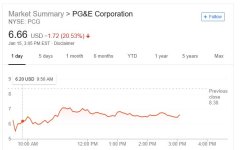

Hmm. When PGE declared bankruptcy in 2001 it stock plunged to 7 something, climbed, plunged again to 8 something, but rebounded in following years. I guess the question is what/if would be different this time around.
This is a great question and I think the answer is that PGE is kind of exempt from the normal things we associate with bankruptcy. Chapter 11 is usually filed by a company in its death throes and they end up in liquidation at some point and then the order of debt paid follows what Ernie was talking about. No traditional investor would touch a company in such a fragile state, but PGE is incestuously unique.
Maybe if we're not worried about PGE truly going bankrupt, fiscally anyway, and liquidating assets, then we're not actually worried about the stock going poof. Maybe stocks get shuffled around, but probably not gone. They've already shown their hand in how they plan to pay for their lawsuits and it's going to come through their rates, so probably not through shareholders. They raise rates, eventually pay their debt, but it's not like rates are going back afterwards, so it's gravy after that.
PGE is so awful, it wouldn't surprise me if these problems were actually desired. Maybe the ten year plan has these debts paid with big margins afterwards, margins created from rate changes that could only have been made from a re-org. California regulators don't make it easy for them to raise rates in a big way, but a fear mongering re-org provides the tools to make it happen. /tinfoil